

Room six
The Metronome
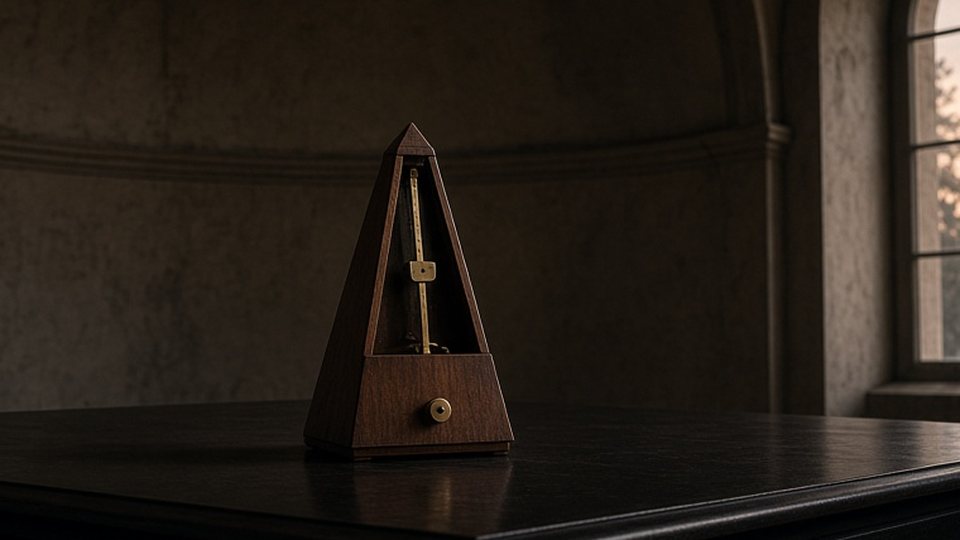
A walnut wind-up metronome on a grand piano in the hall at dusk. The tick is a real one: a West German Wittner, recorded on a wooden floor.
Setting the tempo
- Drag the brass weight up the rod to go slower, down to go faster, the way you would on a real one. The scale behind the rod shows the tempos.
- The number under the metronome: drag it left or right (Shift is finer), or click it and type a tempo. Its old name (Andante, Allegro...) sits under it.
- The arrow keys nudge it, one at a time (Shift: ten). Every step clicks.
- Wind it (or the space bar) starts and stops it. The pendulum reaches a side on every beat.
Practising with it
- Bell: off, or a bell on beat one every 2, 3, 4 or 6 beats.
- On 2 & 4: it ticks only on the backbeats, the way jazz players practise.
- Drop-out: two bars of ticks, then two bars of silence. Keep playing through the gap; when it comes back, you'll hear whether your time held.
- Volume sits at the end of the row; double-click it for the usual level.
The tick: Freesound user spt3125's recording of a Wittner, "Made in W. Germany" (CC0), cut into single ticks, one for each side of the swing.
Walk into the Metronome →